


 Cart
Cart
 sales@molnova.com


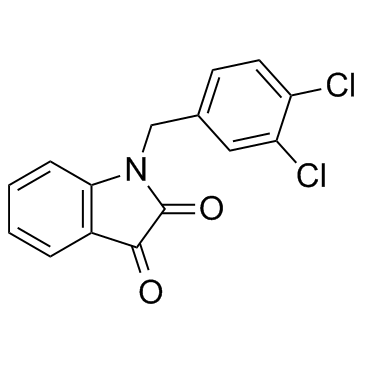
Apoptosis Activator 2
CAS No. 79183-19-0
Apoptosis Activator 2( —— )
Catalog No. M15971 CAS No. 79183-19-0
An apoptosis activator that strongly induces caspase-3 activation, PARP cleavage, and DNA fragmentation.
Purity : >98% (HPLC)
 COA
Datasheet
HNMR
HPLC
MSDS
Handing Instructions
COA
Datasheet
HNMR
HPLC
MSDS
Handing Instructions
| Size | Price / USD | Stock | Quantity |
| 5MG | 31 | In Stock |


|
| 10MG | 49 | In Stock |
|
| 25MG | 101 | In Stock |
|
| 50MG | 144 | In Stock |
|
| 100MG | 259 | In Stock |
|
| 200MG | 424 | In Stock |
|
| 500MG | Get Quote | In Stock |
|
| 1G | Get Quote | In Stock |
|
Biological Information
-
Product NameApoptosis Activator 2
-
NoteResearch use only, not for human use.
-
Brief DescriptionAn apoptosis activator that strongly induces caspase-3 activation, PARP cleavage, and DNA fragmentation.
-
DescriptionAn apoptosis activator that strongly induces caspase-3 activation, PARP cleavage, and DNA fragmentation; leads to the destruction of cells (Apaf-1 dependent) with IC50 of 4 uM; exert cytostatic and cytotoxic effects on a variety of cancer cell lines while having little or no activity against the normal cell lines tested.
-
In VitroMDK83190 (Compound 2) (1-50 μM; 2 hours) effects against cell lines of lymphoid origin (CCRF-CEM, MOLT-4, and Jurkat) with IC50 values ranging from 4 to 9 μM.MDK83190 (Compound 2) (20 μM; 30 mins) activates procaspase-9 and procaspase-3 in a cyto c-dependent manner.MDK83190 (Compound 2) (0.1-100 μM; 22 hours)strongly induces caspase-3 activation, PARP cleavage, and DNA fragmentation, and finally killing cells with an IC50 of 4 μM. Cell Viability Assay Cell Line:Leukemia cell line: CCRF-CEM cells, MOLT-4 cells, and Jurkat cells Concentration:1-50 μMIncubation Time:2 hours Result:Was sensitive to compound 2-induced apoptosis.Western Blot Analysis Cell Line:Hela cellsConcentration:20 μM Incubation Time:30 mins Result:Induced procaspase-9 and procaspase-3 to active forms.Apoptosis Analysis Cell Line: Jurkat cells Concentration:0.1-100 μM Incubation Time:22 hours Result:Resulted inapoptosis and finally killed cells.
-
In Vivo——
-
Synonyms——
-
PathwayApoptosis
-
TargetApoptosis
-
RecptorCaspase-3
-
Research AreaCancer
-
Indication——
Chemical Information
-
CAS Number79183-19-0
-
Formula Weight306.1435
-
Molecular FormulaC15H9Cl2NO2
-
Purity>98% (HPLC)
-
SolubilityDMSO: ≥ 46 mg/mL
-
SMILESO=C1N(CC2=CC=C(Cl)C(Cl)=C2)C3=C(C=CC=C3)C1=O
-
Chemical Name1H-Indole-2,3-dione, 1-[(3,4-dichlorophenyl)methyl]-
Shipping & Storage Information
-
Storage(-20℃)
-
ShippingWith Ice Pack
-
Stability≥ 2 years
Reference



-
KT5823
KT5823 is a selective and potent cGMP-dependent protein kinase (PKG) inhibitor with inhibitory effects on PKA and PKC.KT5823 increases thyroid-stimulating hormone-induced (Na+/I- symporter) NIS expression and iodide ion uptake by modulating sodium iodide symporter protein expression and activity in thyroid cells. KT5823 induces apoptosis.
-
Geranylgeraniol
Geranylgeraniol is an isoprenoid found in fruits, vegetables, and grains, including rice. Geranylgeraniol inhibits growth and induces apoptosis of various tumor cells. Geranylgeraniol protects monocytes against statin-induced cytotoxicity and suppresses the growth of Mycobacterium.
-
Methyl-4-oxoretinoat...
Methyl-4-oxoretinoate is a synthetic retinoid compound with anticancer compounds that can induce differentiation and apoptosis in cancer cells.Methyl-4-oxoretinoate is used in the treatment of acne, psoriasis, and other skin disorders.Methyl-4-oxoretinoate has the potential to be used in the treatment of a variety of ocular disorders such as age-related macular degeneration. related macular degeneration).
